

Waiting
1: The Way to Begin Again | Scene 5: Use Me | Day 2 of 6

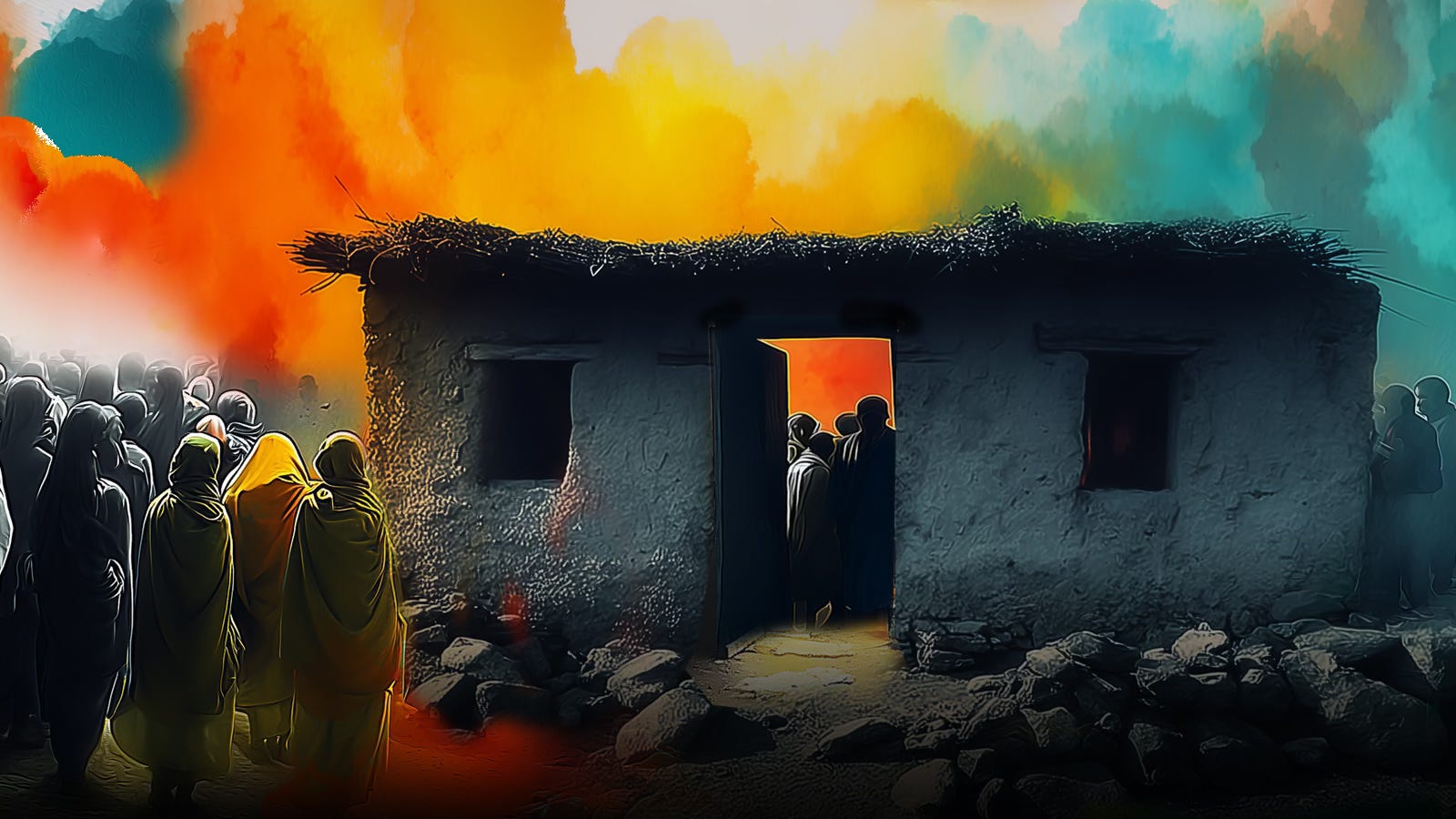
As soon as they left the synagogue, they went with James and John to the home of Simon and Andrew. Simon’s mother-in-law was in bed with a fever, and they immediately told Jesus about her. So he went to her, took her hand and helped her up. The fever left her and she began to wait on them.

That evening after sunset the people brought to Jesus all the sick and demon-possessed. The whole town gathered at the door, and Jesus healed many who had various diseases. He also drove out many demons, but he would not let the demons speak because they knew who he was.

 - Mark 1:29–34
My stepfather died today.
I write this on the evening of Easter Sunday, a.k.a. Resurrection Day. And while it is a hard day to say goodbye, in another way, is there a better day to die? The veil between this age and the age to come feels especially thin today.
On the highway back from seeing him for the last time, I passed a familiar old billboard: “JESUS SAVES.”
Two blunt words, stark and bold.
Most people read it as a spiritual phrase about going to heaven. But the Greek word sozo, translated “save,” also means “to heal.” To rescue. To restore. To make whole.
Jesus saves.
Jesus heals.
In the way of Jesus, these are the one and the same.
In our story of Jesus, we have come to Jesus’ first recorded healing. He has just finished his tour de force teaching performance, a fresh face with total command of the Scriptures. The group is ready for post-church lunch—one of the glorious moments of the week (only to be superseded by the Sunday nap, of course).
Jesus returns with his new followers to the home of Simon and Andrew. But Simon’s mother-in-law is sick with a fever. Notice Jesus’ response: immediate, intimate, relational. He approaches her bedside, takes her hand, and helps her rise. The fever leaves. She is restored, not just physically, but relationally, back into community.
Jesus begins His healing ministry with family, because healing, to Jesus, is profoundly relational. It is what you do for those you love.
We tend to idealize biblical scenes. Modern Jesus movies show robed, first-century hustle and bustle. But one thing they don’t show is sickness.
Sickness was pervasive and has been throughout most of human history. Without antibiotics and other miracles of modern medicine, people suffered. Fevers were serious and feared. When word spread that someone could heal, desperate townspeople gathered immediately at Simon’s door.
But Mark notes carefully:
… and Jesus healed many…
Not everyone.
We don’t fully understand why. Sometimes healing isn’t instant, isn’t physical, or isn’t what we expect. Sometimes, the deepest healing happens inside us, in our hearts, even if physical sickness remains.
In today’s church, we tend to swing between two extremes: one treats healing like a magic trick. The other reduces everything to science, as if Jesus couldn’t possibly intervene.
Both are distortions. Both perspectives miss the heart of Jesus’ relational care. This is where our suspicion emerges. Deep down, we worry God doesn’t care enough to heal us or our loved ones. Suspicion whispers: “If God cared, He would heal exactly as I want, when I want.”
When healing doesn’t come immediately or visibly, we can begin to mistrust God’s goodness.
Yet Jesus invites us beyond suspicion. Trusting God’s care doesn’t mean we get immediate answers. It means believing He is deeply present with us in the waiting. It means believing that even in unanswered questions or ongoing pain, His care is unwavering, personal, and intimate.
Life feels like a waiting room sometimes. Waiting is hard. But when we accept that God is near, the waiting room becomes a place not just of longing, but also of closeness. As as I sat with my whole family, and we found a bond in the moment, Jesus was with us, caring, healing, making us whole in ways we might not yet see.
Yes, Jesus saves, and it is okay to ask. We will not always get an answer in the way that we want. We cannot fully understand or know the ways of God.
In a world filled with pain—emotional, physical, mental—we still gather at the door, wondering if the rumors are true. Is God truly good? Can we trust Him enough to ask for healing?
Simon’s mother was sick, and Jesus healed her. Sometimes, though, the healing doesn’t come. The promise from Jesus is that one day, all waiting will end. No more sickness. No more pain. No more death. Until then, we wait, pray, and hope—not suspiciously, but with confidence in the care of the One who promises to make everything whole. Healing isn’t a side-story. It is the heart of Jesus’ relational mission of care.
Pray
Lord, you see our sickness, visible and hidden. You have the power to heal, to save, to make whole. Help us trust Your relational care deeply, even as we wait. Whether healing comes now or later, help me to trust in Your goodness. Amen.
Live It
Doctor: Have you ever thought of Jesus as a doctor? What does the image do for you?
Struggled? Have you ever struggled to believe God is near because healing didn’t happen as you hoped or prayed?
Name it: Where you need healing: physically, emotionally, mentally, spiritually.
Pray: Pray specifically, trusting Jesus’ intimate care and presence. Let go of suspicion; lean into His goodness.
Where We Are: Season 1 | Scene 5 of 6 | Day 2 of 6
Next: Day Three posts Saturday, March 7, 2026
Coming Soon: After this scene, we’ll move to Scene Six: The Lie That I’m on My Own
I needed this today. “Life feels like a waiting room sometimes. Waiting is hard. But when we accept that God is near, the waiting room becomes a place not just of longing, but also of closeness.” So true❤️